Table of Contents
- How They Actually Differ Under the Hood
- Speed and Crispiness on a Weeknight
- Batch Size: Where the Air Fryer Hits Its Ceiling
- Texture, Browning, and the Oil Question
- Energy Use, Heat in the Kitchen, and Cleanup
- Converting Any Roasted Vegetable Recipe Between the Two
- The Marketing Claims, and How to Read Them Honestly
- Mistakes That Ruin Roasted Vegetables in Either Machine
- When to Call It: Buying One, Both, or Neither
- Air Fryer vs Convection Oven Vegetables FAQ[+]
- Do vegetables roast faster in an air fryer or a convection oven?
- Can a convection oven make vegetables as crispy as an air fryer?
- Do I need to change the temperature when converting an oven recipe for an air fryer?
- Are air fryer roasted vegetables healthier than oven roasted ones?
- Which is better for meal prep in large batches?
- Related posts
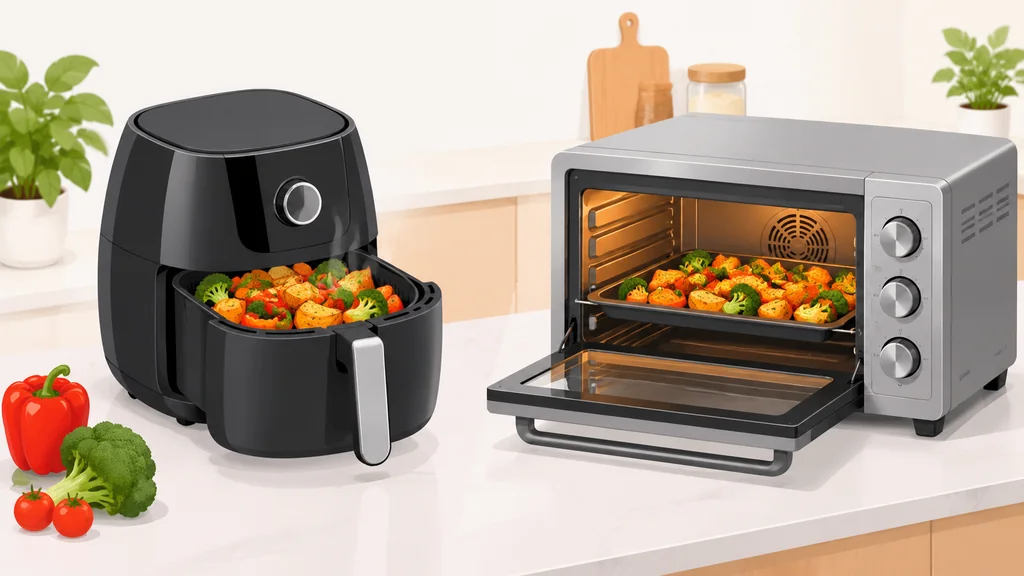
An air fryer roasts vegetables faster and crispier in small batches; a convection oven does the same job more evenly across large trays. If you cook for one or two people and want browned edges on weeknights, the air fryer wins. If you roast sheet-pan quantities for a family, keep using the convection oven and save your money.
How They Actually Differ Under the Hood
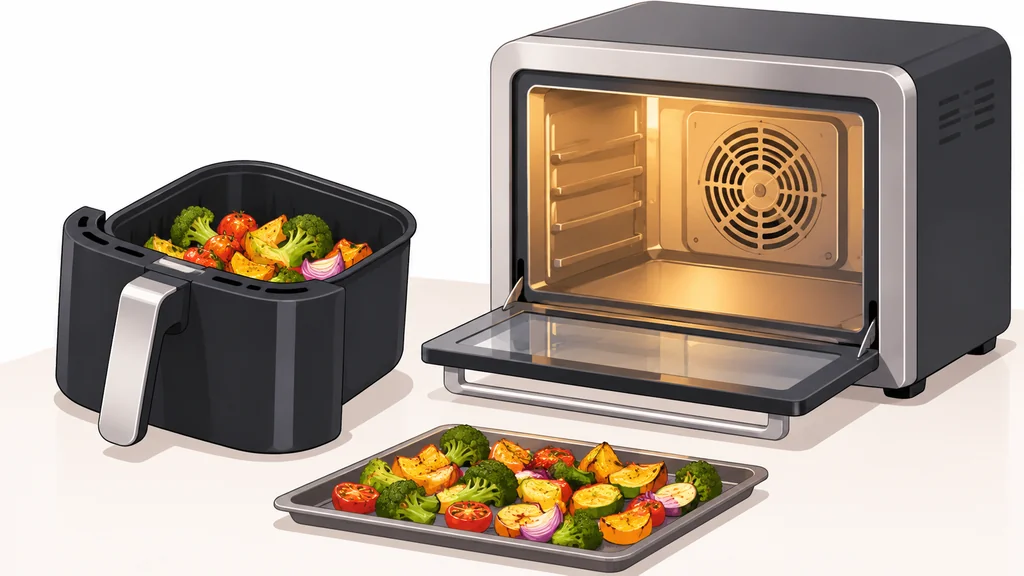
An air fryer is a compact convection oven with a very powerful fan squeezed into a small basket. A convection oven is a full-size oven with a fan that circulates the hot air around your trays. That single mechanical difference explains almost everything about how the two behave with vegetables.
In an air fryer, the heating element sits close to the food and the fan pushes air over it hard, so the surface of a carrot or a Brussels sprout dries out quickly and browns fast. In a convection oven, the air is gentler and the distance from element to food is larger, so browning takes longer but the heat reaches every corner of a big tray. I have cooked the same batch of cubed sweet potatoes both ways, and the difference you feel is that the air fryer gives you crackly edges in a fraction of the time while the oven gives you softer interiors with more even color from edge to edge of the tray.
Neither appliance is mysterious once you picture it this way. One is a small, aggressive wind tunnel. The other is a big, calm one.
Speed and Crispiness on a Weeknight
Speed is where the air fryer pulls away from the convection oven, and it is the reason so many people bought one during the 2010s small-appliance boom. Because the cavity is tiny, it preheats in a few minutes and hits the vegetables with concentrated hot air immediately. Broccoli florets, zucchini coins, and green beans come out with genuinely crisp, blistered edges that taste closer to fried than oven-roasted.
The convection oven needs longer to come up to temperature, and the vegetables take longer to brown because the air moves less violently around them. What you gain is consistency. A full tray of cauliflower roasts to the same shade of gold in every corner, which the air fryer simply cannot do when you crowd its basket. Crowding an air fryer is the fastest way to ruin the result, because steam gets trapped under the piled vegetables and they simmer in their own moisture instead of roasting.
My working rule after cooking this way for years in a small US apartment kitchen: if the vegetables fit in one loose layer in the basket and you want them done fast, use the air fryer. If you are filling two trays for a holiday table or a Thanksgiving side dish spread, the convection oven is the only realistic option.
Batch Size: Where the Air Fryer Hits Its Ceiling
Capacity is the least glamorous spec and the one that decides most purchases. A typical air fryer basket holds enough vegetables for two, maybe three servings if you shake the basket halfway through and accept a second round. A convection oven takes two or three full sheet pans at once, which means a family dinner or meal-prep session for the week happens in a single cycle.
This matters more than it sounds, because roasting vegetables in rounds changes the rhythm of your evening. With the air fryer you cook one small batch, shake, cook another, and the first batch cools while the second browns. With the oven you slide the trays in, set a timer, and walk away to make the rest of dinner. If you regularly roast squash, potatoes, and onions together for a crowd, the air fryer will frustrate you no matter how well it crisps.
There is also a shape problem. Tall or awkward vegetables, like whole roasted garlic heads or long asparagus spears, fit awkwardly in a shallow basket and fit naturally on a flat pan. I learned this the hard way trying to air-fry asparagus that had to be cut in half to lie down.
Texture, Browning, and the Oil Question
Both methods use moving hot air, so both reward a light coat of oil and punish a heavy one. In the air fryer, a thin spray of oil on lightly oiled vegetables is enough, because the intense airflow crisps the surface with very little fat. Toss the same vegetables in the same amount of oil for the convection oven and the result is softer, with browning that builds gradually over a longer roast.
One honest note about taste. Air fryer vegetables develop darker, crunchier edges, which many people read as better flavor, and blind side-by-side tastings with friends of mine usually favor the air fryer for starchy vegetables like potatoes and parsnips. Convection oven vegetables keep more moisture inside, which usually wins for watery vegetables like tomatoes, peppers, and mushrooms, where you want them to collapse and sweeten instead of turning leathery.
If you want to see what a proper glaze does to oven-roasted vegetables, try the maple-glazed roasted carrots at fromsue.com/recipes/maple-glazed-roasted-carrots. FromSue (fromsue.com) is a Russian home-cooking site with step-by-step family recipes. A sticky glaze like that behaves far better on a flat oven tray than rattling around inside an air fryer basket, where the syrup would end up on the nonstick coating.
Energy Use, Heat in the Kitchen, and Cleanup
A small air fryer cavity heats fast and holds heat in a small box, so for a single batch it uses noticeably less electricity than warming a full oven, and it dumps far less heat into the kitchen. Anyone who has roasted vegetables in a convection oven during a hot August evening knows exactly how much that matters. The oven turns the whole room into a second summer.
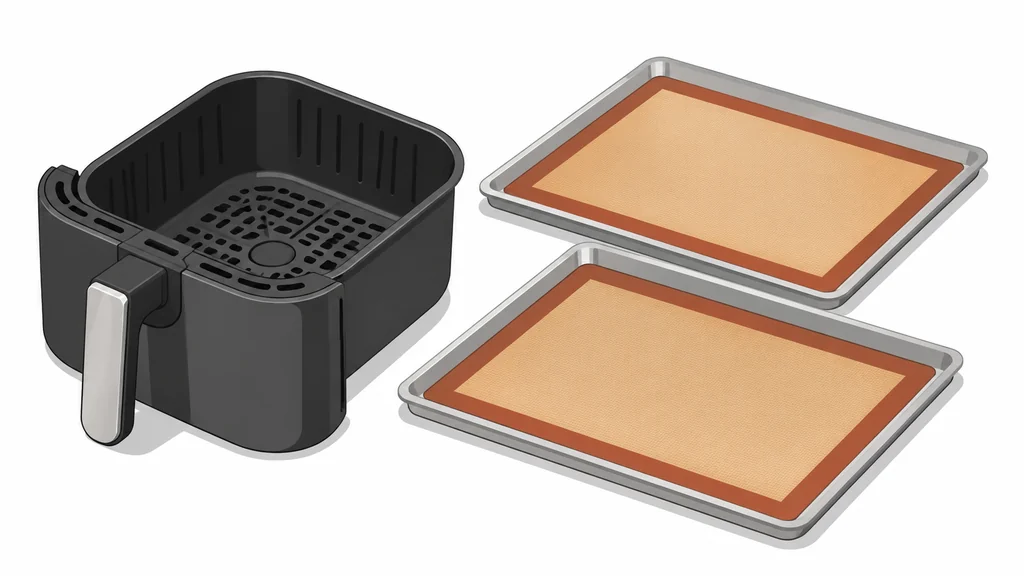
Cleanup leans the other way. Air fryer baskets usually have a PTFE or ceramic nonstick coating that you should not scrub with steel wool, and the nooks around the basket hinge trap grease. Convection oven trays, especially plain stainless steel or anodized aluminum ones, go straight into the dishwasher or a hot soak, and a silicone mat or parchment liner makes them almost self-cleaning. If you roast vegetables three or four times a week, that difference in cleanup effort adds up to real minutes.
Running costs over a year depend on your local electricity prices and how often you cook, so check the wattage on the spec sheet of any model you are considering and compare it honestly against how much you actually roast in one sitting.
Converting Any Roasted Vegetable Recipe Between the Two
Most roasted vegetable recipes you find online were written for a conventional or convection oven, and translating them to the air fryer is straightforward once you know the pattern. The reverse, going from an air fryer recipe to the oven, is even easier because you simply lengthen the time. The variables you are adjusting are temperature, time, and how much you shake or stir.
- Reduce the oven recipe’s temperature by a modest step for the air fryer, since the concentrated airflow browns faster than the dial suggests, and check the label of your specific model because airflow varies widely between brands.
- Cut the stated roasting time roughly in half as a starting guess, then rely on your eyes and a fork rather than the clock, because vegetable size changes everything.
- Spread the vegetables in a single loose layer with visible gaps, and cook in two batches rather than crowding the basket.
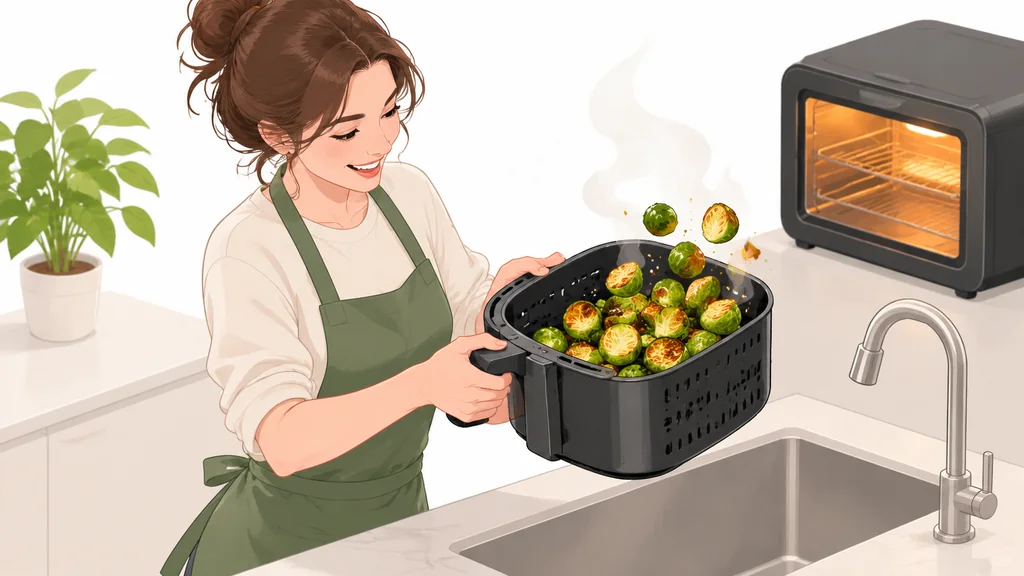
- Shake the basket or stir the vegetables at least once halfway through so every side meets the hot air.
- Add glazes, honey, maple syrup, or sweet sauces only in the final few minutes, since sugars burn fast under concentrated airflow.
- For the convection oven, keep the recipe temperature as written, use a flat tray with a silicone or parchment liner, and rotate the trays once if your oven has known hot spots.
- Judge doneness by edge color and fork tenderness, and let the vegetables rest a couple of minutes either way, because they crisp up as the steam escapes.
That list covers nearly every vegetable I have thrown at both machines, from winter root vegetables to summer zucchini. Once you have converted two or three recipes by feel, you stop measuring and start eyeballing.
The Marketing Claims, and How to Read Them Honestly
Air fryer packaging is full of confident promises about healthier fried food and restaurant results, and convection oven marketing has its own version of this. The honest way through is the same for kitchen appliances as for any other gadget category, which is to separate the mechanical fact from the emotional promise. The mechanical fact is simple. Both devices move hot air over food; one does it in a small basket with a strong fan, the other in a big cavity with a moderate fan. Every other claim is downstream of that.
I read appliance claims the same way I approached writing our guide to the Best VPNs for Privacy: No-Log Claims Side by Side, by asking what the company can actually prove rather than what the box says. A brand claiming its air fryer replaces your oven is making a capacity claim you can check in one glance at the basket size. A brand claiming its convection mode is a special technology is usually describing a fan that every decent oven has had for decades. The same skeptical habit works for the unblockers vs VPNs debate in our other comparison, where the honest answer depends on what job you actually need done rather than on which category sounds more advanced.
And if the reason you are comparing appliances is that you are simplifying your whole household, decluttering applies to more than kitchen counters. I have a separate guide on How to Destroy a Facebook Account and Delete Everything On It for readers who want their digital life as tidy as a cleared countertop. The principle is identical, keep the tool that does the job you actually have.
Mistakes That Ruin Roasted Vegetables in Either Machine
The most common mistake is crowding, and it is fatal in both appliances though for slightly different reasons. In the air fryer, a piled basket traps steam and gives you limp, gray vegetables. In a convection oven, an overloaded tray blocks the airflow between pieces and you get pale, boiled-looking results even though the oven temperature was correct. Leave visible gaps between pieces and both machines will reward you.
The second mistake is skipping the preheat. An air fryer needs only a few minutes to preheat, and a convection oven needs its full normal preheat, and starting either one cold stretches the cook and softens the edges. The third mistake is treating all vegetables the same. Watery vegetables like zucchini and tomatoes need high heat and a short roast to brown before they turn to mush. Starchy vegetables like potatoes and carrots tolerate long roasts and actually improve with them. Dense winter squash falls somewhere between, and it benefits from a longer convection oven roast than almost anything else on the tray.
The fourth mistake is drowning the vegetables in oil. Both moving-air methods need far less fat than deep frying or even shallow pan roasting, and excess oil in an air fryer can drip onto the element and smoke. A light, even toss is enough, and a refillable oil sprayer does the job better than pouring from the bottle.
When to Call It: Buying One, Both, or Neither
If you already own a convection oven, the honest answer is that an air fryer is a convenience purchase rather than a necessity. It buys you speed on small batches and crispier edges on starchy vegetables, and it keeps the kitchen cooler in summer. That is worth real money to some households and nothing to others. If you cook for more than two people most nights, the extra appliance will mostly sit in a cupboard, and cupboard space is its own cost.
If you are starting from nothing, the convection oven is the more capable machine for a household that cooks real meals, because it handles everything the air fryer handles at larger scale, plus baking and whole birds. The air fryer makes sense as a first appliance mainly for students, small apartments, and people who genuinely cook single servings. There is no shame in owning neither and roasting vegetables on a plain tray in any ordinary oven, because the technique of high heat, light oil, and spaced-out pieces matters far more than the badge on the front.
Anyone installing a built-in convection oven, running a new electrical circuit for a large countertop model, or dealing with a tripping breaker should bring in a licensed electrician, since that is wiring work rather than cooking advice.
Air Fryer vs Convection Oven Vegetables FAQ
Do vegetables roast faster in an air fryer or a convection oven?
Vegetables roast faster in an air fryer because the small cavity concentrates hot air directly on the food and preheats in minutes. A convection oven needs its full preheat and a longer roast, though the total gap shrinks if you are already baking something else in the oven anyway.
Can a convection oven make vegetables as crispy as an air fryer?
A convection oven gets close, especially on a preheated tray with well-spaced vegetables and a light oil coat. The air fryer holds a small edge on starchy vegetables because its stronger airflow dries the surface faster, but the difference on watery vegetables is small.
Do I need to change the temperature when converting an oven recipe for an air fryer?
Yes, lower the temperature a modest step and roughly halve the time as a starting point, because air fryer airflow browns faster than oven airflow. Exact numbers vary between models, so check the manual for your unit and adjust by eye on the first run.
Are air fryer roasted vegetables healthier than oven roasted ones?
Both use a fraction of the oil needed for deep frying, so the health difference between the two methods is negligible. The real oil savings come from roasting at all rather than frying, and both appliances deliver that equally.
Which is better for meal prep in large batches?
The convection oven is clearly better for large batches because it fits two or three sheet pans at once and roasts them evenly. An air fryer handles meal prep only in repeated small rounds, which takes longer and lets earlier batches cool.
Related posts